437 Macon Street, Brooklyn
Full-elevation restoration: the existing brownstone was taken down to sound structure, rebuilt with a layered scratch coat, and finished with a mixture of cements and brownstone.
Service — Brownstone & Stone
If a brownstone is cracking, peeling, flaking, or leaking, the damage rarely stays on the surface — it spreads into the mortar joints, the lintels and sills, and the stoop. Perfect Construction USA Corp restores brownstone facades across Brooklyn, Queens, Manhattan, the Bronx, and Staten Island, from its Brooklyn base, and has served the Tri-State area for over 20 years.
The Material
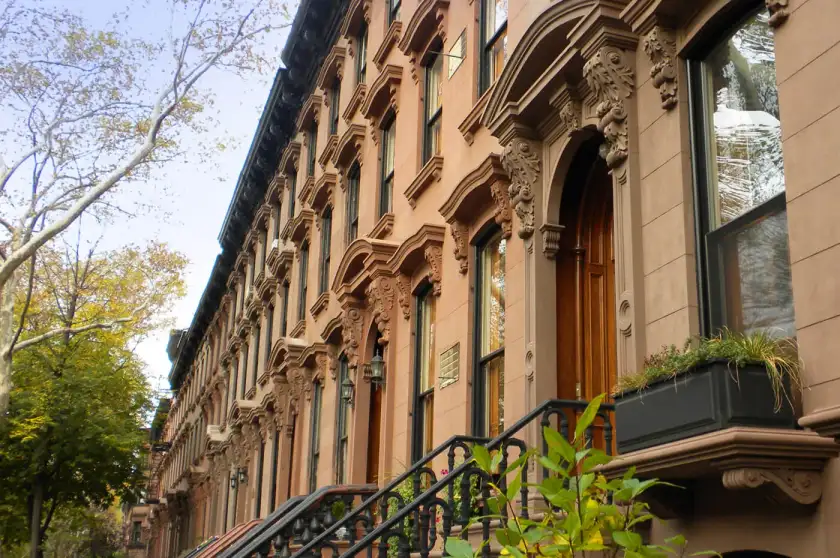
Brownstone is sandstone, and older sandstone deteriorates when water enters the surface, freezes, and expands — breaking down the stone's natural bonding layer by layer. When the face begins to spall, flake, or crumble, water moves behind the surface and starts on the brick backup, the steel lintels, and the interior walls.
A sound restoration plan starts by finding the real source. Sometimes the issue is the stone itself; other times it is failed pointing, poor flashing, roof runoff, a cracked parapet, or an old coating trapping moisture. The repair is sequenced around that diagnosis — stop the water first, then rebuild the stone.
Scope of Work
The sequence below is the company's documented method — the same one recorded on its full-elevation restoration at 437 Macon Street, Brooklyn. Every elevation is priced from an in-person survey, because the scope that matters is the scope the stone actually needs.
Facade Anatomy
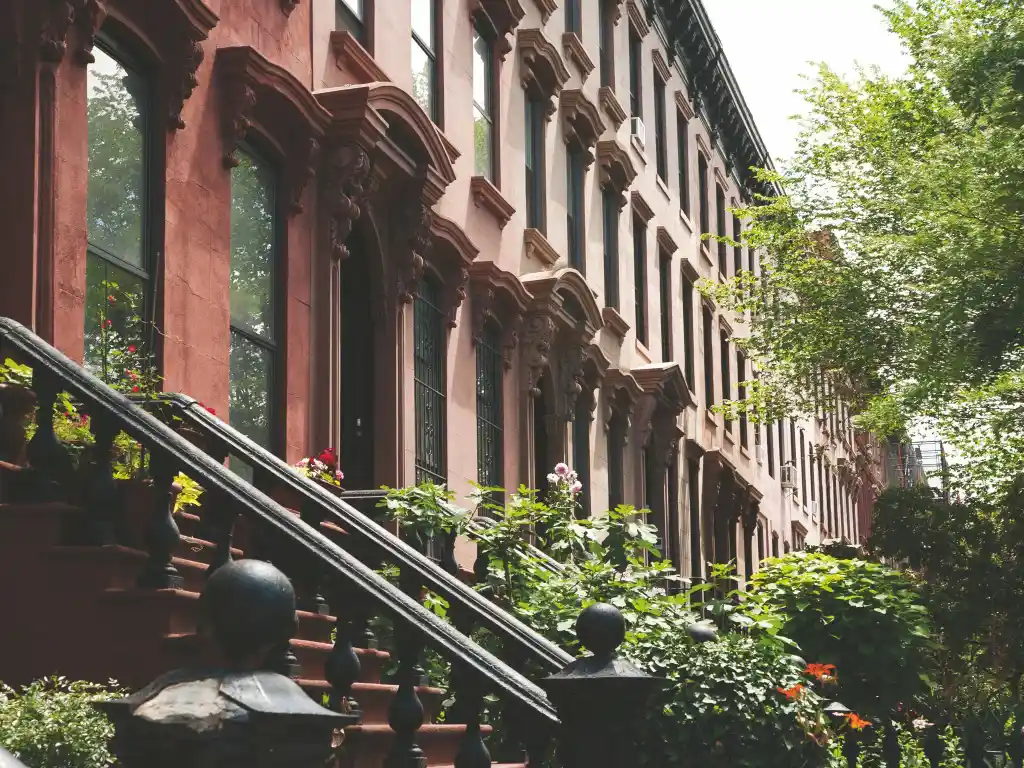
1 Lintels & Sills
The stone caps over windows and doors shed water outward. Cracked or displaced units stain, rust at the steel behind them, and channel water into the wall.
2 The Stone Face
Brownstone is a soft sandstone. Once water reaches its bedding plane, freeze-thaw cycles shed the face in thin layers — spalling that spreads if the entry point stays open.
3 Mortar Joints
The wall's first line of defense. Joints that are cracked, recessed, or washing out as sand are raked out and repointed with matched mortar before the stone behind them suffers.
4 Cornice & Parapet
The top of the elevation takes the weather first. Failed caps and open parapet joints are the most common source of the leaks that appear floors below.
5 The Stoop
Steps, cheek walls, and railings take foot traffic, salt, and standing water. Stoop restoration is usually planned with the facade — see the documented stoop work on the projects page.
Landmarked building or historic district? Exterior work can require Landmarks Preservation Commission approval in addition to any DOB filing — the estimate is where that gets settled, before work is scheduled. Facade questions, including Local Law 11 / FISP, are answered on the FAQ page →
Documented Work
Full-elevation restoration: the existing brownstone was taken down to sound structure, rebuilt with a layered scratch coat, and finished with a mixture of cements and brownstone.
Repointed brickwork, a restored stoop, and renewed window sills and door header across the front elevation. View the project →
Full-elevation brownstone restoration — damaged material removed, the facade rebuilt with a layered scratch coat and a cement-and-brownstone finish matched to the building.
Questions & Answers
The most common brownstone facade problems are surface spalling and flaking, cracked or delaminated brownstone units, open and failing mortar joints, and staining or displacement around lintels and sills. Brownstone is a soft sandstone, so water entering through failed joints or cracked units accelerates the decay each winter. Restoration typically combines stone patching or replacement, repointing with matched mortar, and repair of the metal and masonry details that shed water.
Brownstone cracks and flakes mainly because water gets into the stone — through failed mortar joints, cracked caps, or a hard cement patch applied in an earlier repair — and then expands as it freezes. Because brownstone was often laid with its bedding plane facing outward, the surface naturally sheds in thin layers once moisture reaches it. Stopping the water entry first, then patching or replacing damaged stone with compatible material, is what keeps the repair from failing again.
Brownstone facade restoration cost depends on how much stone must be patched or replaced, the length of joints to be repointed, the building's height and access, and whether the work is tied to a FISP filing with DOB deadlines. Decorative elements — lintels, sills, cornices, and the stoop — each add scope that only an in-person survey can measure. Perfect Construction provides free facade estimates; call (347) 335-8089 to schedule one.
Perfect Construction USA Corp restores brownstone facades in Brooklyn, based at 754 Drew St, Brooklyn, NY 11208. The company's specialty is historic NYC brownstones and brick buildings — facade restoration, stone repair, and mortar matching — and it has served the Tri-State area for over 20 years. For a facade survey and free estimate, call (347) 335-8089.